
Home Physiotherapy vs. Clinic Visits: Which is More Effective?
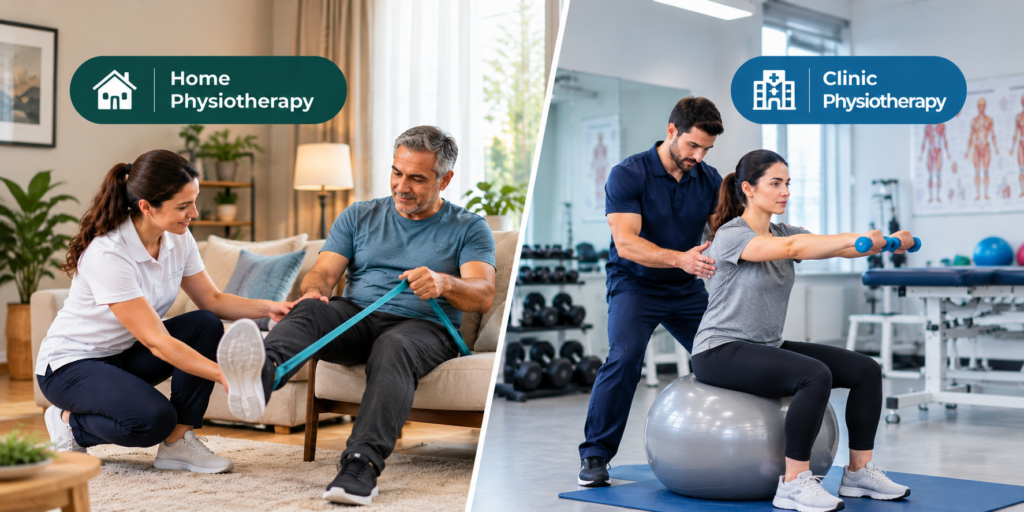
Physiotherapy is a vital part of recovery from injuries, pain management and improvement of physical mobility. Traditionally patients have attended clinics to receive treatment but home based care is becoming an increasingly convenient option for those who would prefer to receive professional treatment in familiar surroundings.
This raises an important question: Does home physiotherapy work as well as clinic visits?
In many cases, home physiotherapy can be as effective as treatment at the clinic. But the results will depend on the patient’s condition, the treatment plan and most importantly the physiotherapist’s expertise in providing the care.
With professional physiotherapy at home, patients can receive individual attention, practise movements in their everyday environment and work towards recovery without the additional difficulty of travelling to a clinic.
Let’s explore how home physiotherapy compares with clinic visits, who can benefit from it and why choosing the right physiotherapistmakes a difference.
What Is Home Physiotherapy and How Does It Work?
Home Physiotherapy is a healthcare service, where a qualified physiotherapist visits the patient at home and examines the patient’s condition and provides suitable rehabilitation.
The professional home physiotherapy service is not only about doing the exercises on your own, but also about assessment, guided treatment, monitoring progress and making adjustments as the patient’s needs change.
What to expect from a home physiotherapy session
Assessing pain, movement, flexibility and muscle strength.
Identifying difficulties with everyday activities.
Providing suitable therapeutic exercises.
Improving balance, coordination and mobility.
Teaching patients how to perform exercises safely.
Monitoring progress and adjusting the rehabilitation plan.
The main advantage is that treatment takes place in the patient’s actual living environment, allowing the physiotherapist to understand the physical challenges they experience every day.
Home Physiotherapy vs Clinic Physiotherapy: Understanding the Difference
Either one can be good for rehabilitation. The right choice is determined by the patient’s condition, the treatment they need and the advice of their physiotherapist.
Physiotherapy at home and in clinics both aim to improve physical function and aid recovery. The main differences are the treatment setting, the available equipment and the accessibility.
1. Individualized Attention and Treatment
A major advantage of physiotherapy in the home setting is the potential for focused one‐to‐one interaction.
A physiotherapist who comes to your home can focus on your particular condition, movement difficulties and rehabilitation goals. Treatment can also be modified as the patient matures.
Clinic physiotherapy can provide the same individualized treatment but home visits have the added benefit of assessing the patient in their own familiar surroundings.
2. Ease and Availability
Getting to a clinic can be a challenge for older patients, those recovering from surgery and people with serious mobility issues.
With physiotherapy at home in Dubai, patients can get the benefit of professional treatment without the need to arrange transportation or deal with traffic.
This convenience can also help patients stick to a more consistent treatment routine, especially when it would otherwise be difficult to attend regular appointments.
3. Access to Equipment and Facilities
Physiotherapy clinics may have specialist equipment, rehab machines, treatment beds and more space to exercise.
Home physiotherapists can use portable equipment and exercises that are appropriate for the patient’s condition and available space. However, some rehabilitation programs require special facilities which are only available in a clinic.
The right setting is the one that meets the treatment needs, not the one that is assumed to be better always.
4. Treatment in a Comfortable Atmosphere
Visiting the patient in their home allows the physiotherapist to see how they move in relation to their true living environment.
For example, they can help you assess problems with:
Getting in and out of bed.
Sitting down and standing up from a chair.
Walking around the house.
Using stairs.
Maintaining balance during everyday activities.
This practical assessment can help the physiotherapist recommend exercises and strategies that are relevant to the patient’s daily routine.
Why Your Location is Less Important Than Your Physiotherapist
Physiotherapists are the key players in the rehab process whether the treatment is at home or in a clinic.
Exercising at home alone does not guarantee an effective recovery. Patients require proper assessment, professional guidance and a treatment plan which corresponds with their physical condition.
What a qualified physiotherapist can do for you:
1. Defining the real problem
The physiotherapist assesses the patient’s movement, strength, pain and physical limitations before starting treatment. This indicates where attention is needed.
2. Creating a Personalised Rehabilitation Program
Every patient has different needs. A treatment programme for someone recovering from knee surgery will differ from one designed for a patient experiencing back pain or balance difficulties.
3. How to Correct Your Exercise Form
If you have bad posture or exercise technique, you may be putting unnecessary strain on your body. A physiotherapist shows exercises, watches how they are done and gives advice.
4. Tracking Progress and Recovery
Recovery is not always a straight line. The physiotherapist monitors progress, identifies difficulties and changes exercises or treatment aims where necessary.
5. Instructions and advice
Patients also need to know about their condition and how to go about their daily activities safely. Physiotherapists can give advice to patients and, where appropriate, family members or carers on how to support rehabilitation.
This is why the experience, clinical judgement and personal attention of the physiotherapist are important parts of a successful home based care.
Who Can Benefit from Physiotherapy at Home?
Home physiotherapy may be suitable for different patients, depending on their medical condition and rehabilitation requirements.
Elderly Patients
Older adults may have reduced muscle strength, balance difficulties, stiffness and limited joint mobility.
Physiotherapy for elderly at home can focus on improving strength, practising safe movement and supporting independence in everyday activities.
Patients Recovering From Surgery
Some patients may find travelling uncomfortable or physically demanding after surgery. Home visits can assist with suitable mobility exercises and gradual rehabilitation as advised by the surgeon.
People With Joint Pain and Back Pain
An individual assessment and appropriate exercise program may be of benefit to patients with back pain, knee pain, shoulder stiffness or other musculoskeletal problems.
Recovering From Injury
People recovering from sports injuries, muscle strains or other physical injuries may need structured rehabilitation to regain movement, strength and function.
People with Limited Movement
Treatment at home may be more convenient for patients who have difficulty walking, standing or travelling on their own.
Each patient should be assessed by a physiotherapist to determine if home treatment is appropriate and safe.
When Should You Choose Clinic Physiotherapy?
There are many benefits of physiotherapy home service. It is not necessarily for all patients.
When treatment in a clinic may be more appropriate:
Rehabilitation requires specialised equipment or facilities.
The patient needs access to hydrotherapy or other facility-based treatment.
A larger exercise space is necessary.
The condition requires closer clinical supervision.
Additional healthcare professionals or specialist services are needed.
The most practical approach for some patients may be to combine home and clinic sessions. For example, rehabilitation might begin with home visits if travel is difficult, and then progress to clinic sessions if more specialised equipment or progressive exercise is needed.
The physiotherapist can advise the correct environment according to the condition and progress of the patient.
How Physio Jonny Makes Home Physiotherapy More Personalised
Selecting the right physiotherapist is one of the most important decisions when arranging home-based treatment.
Physio Jonny believes that the physiotherapist is at the heart of meaningful and personalised care. Home physiotherapy services in Dubai allow patients to receive professional physiotherapy assistance right in the comfort of their own homes.
Physiotherapists look at a person’s condition, physical limitations and recovery goals, rather than asking each patient to do the same exercise routine.
During home visits the physiotherapist might:
Understand the patient’s specific movement difficulties.
Assess how the patient performs everyday activities at home.
Recommend appropriate exercises based on individual needs.
Guide patients on correct movement and exercise techniques.
Monitor progress and make suitable adjustments to the treatment plan.
Monitor progress and modify the treatment plan as needed.
This level of personal attention is especially helpful for patients who need frequent support, older adults with mobility problems and people who have difficulty making it to a clinic.
If you are thinking of physiotherapy at home in Dubai, Physio Jonny can help you to explore a home-based treatment option that suits your needs.
Frequently Asked Questions
Is physiotherapy at home as effective as physiotherapy at a clinic?
Yes, for many patients, home physiotherapy can be just as effective as treatment in a clinic, provided the treatment is appropriate for their condition and performed by a qualified physiotherapist. But some conditions need specialist equipment in clinic or closer medical supervision.
Is home physiotherapy good for elderly patients?
Yes. Physiotherapy for elderly patients in the home may assist with mobility problems, muscle weakness, balance problems and difficulties with activities of daily living. The treatment approach should be based on an individual assessment.
How long is a physiotherapy session at home?
Session duration depends on the patient’s condition, assessment requirements and treatment plan. Your physiotherapist can recommend an appropriate session length.
What equipment does a home physiotherapy has?
Depending on the treatment required, a physiotherapist may use portable exercise equipment, resistance bands, mobility aids or other appropriate tools. The equipment needed depends on the patient.
Is it possible to do physiotherapy at home after surgery?
If home rehabilitation is approved and appropriate for the patient’s condition, it may be suitable following surgery. Patients should adhere to their surgeon’s instructions and any restrictions on movement or weight bearing.
Is home physiotherapy available for back pain and knee pain?
A physiotherapist can assess back pain, knee pain and associated movement difficulties and suggest appropriate exercises and treatment strategies. Treatment depends on the underlying cause of the symptoms.
How much does home physiotherapy cost compared to clinic treatment?
The fee structure of home physiotherapy can be different as the service is provided by travelling to the patient’s place. Costs vary depending on provider, location, length of session and treatment needs. Please be aware of the charges before you book.
How to find the best home physiotherapist in Dubai?
Find a physiotherapist who is qualified to treat your condition, communicates clearly, and has experience with your condition. Find out about their assessment process, treatment approach, how they will monitor your progress and whether home treatment is appropriate for your needs.