
Pilates vs Physiotherapy: Which One Do You Need?
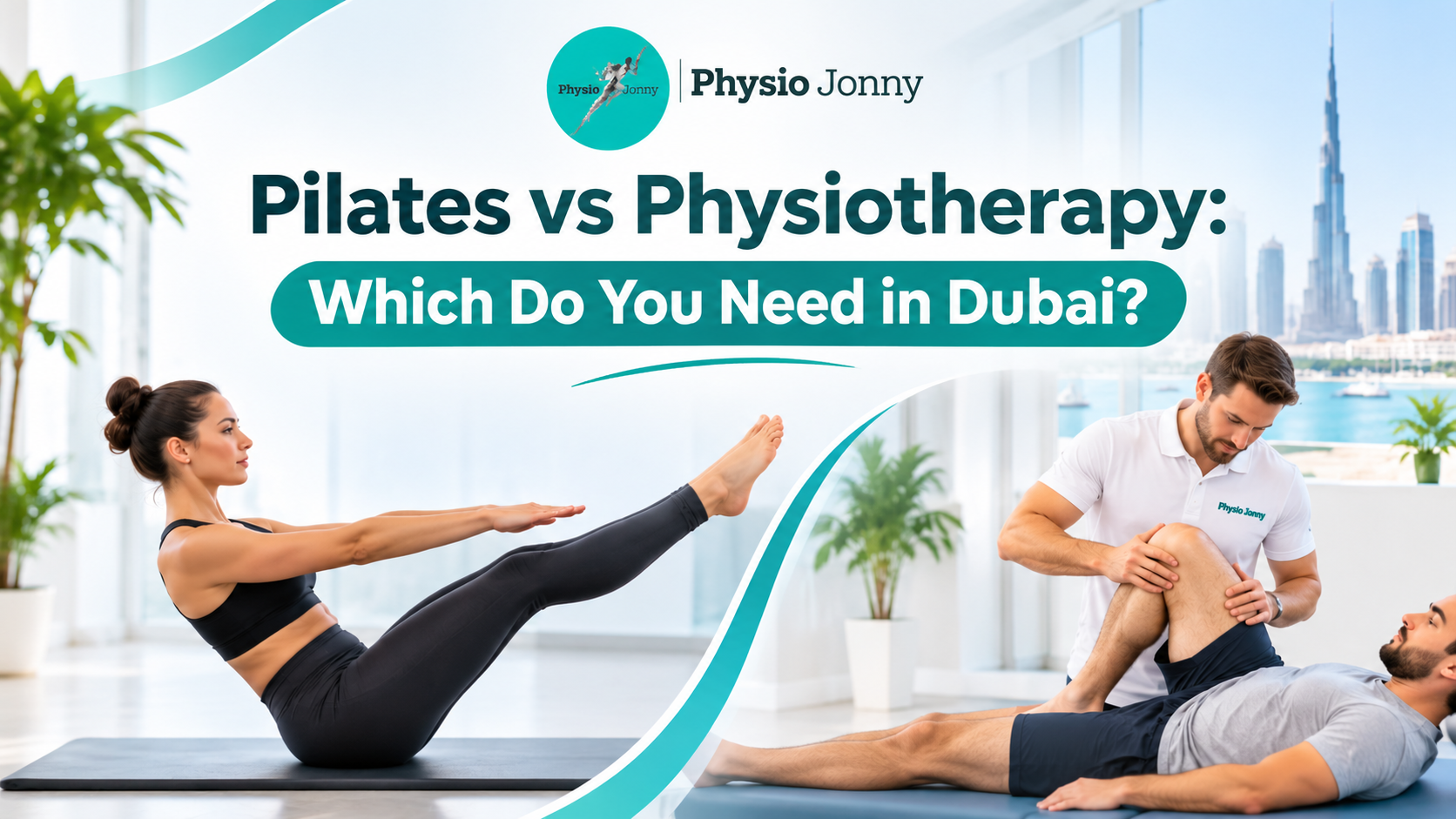
Are you suffering from back pain, stiffness, an injury, or just want to improve your strength and mobility, you might be asking yourself: Pilates or physiotherapy? They both can help you move better but they do different jobs.
Which one is right depends on what is going on in your body at the time. Physiotherapy is often the best place to start if you are experiencing pain, have a new injury, mysterious symptoms, or a condition that needs to be assessed on an individual basis. Pilates is a structured form of exercise which can help to build strength, control, flexibility and confidence of movement. In some situations the two can cancel each other out..
This guide explains the difference between Pilates and physiotherapy, when each can be useful and how to decide on your next step in Dubai.
What is the difference between Pilates and physiotherapy?
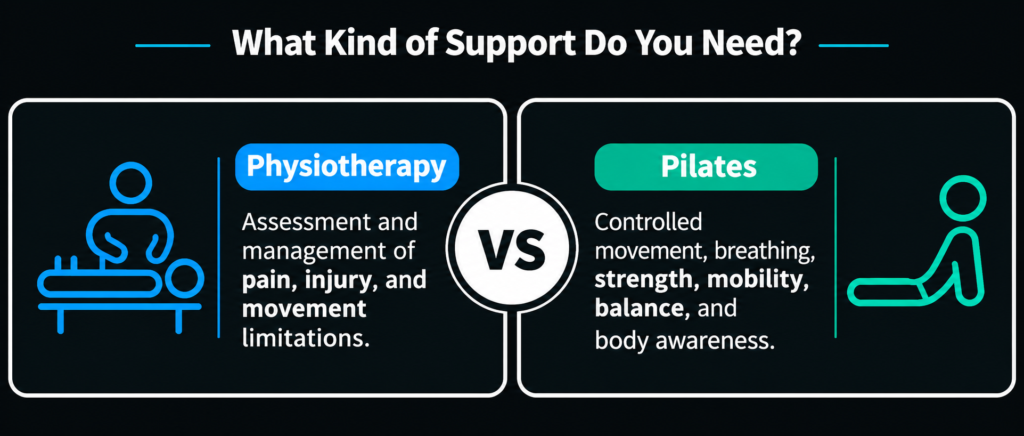
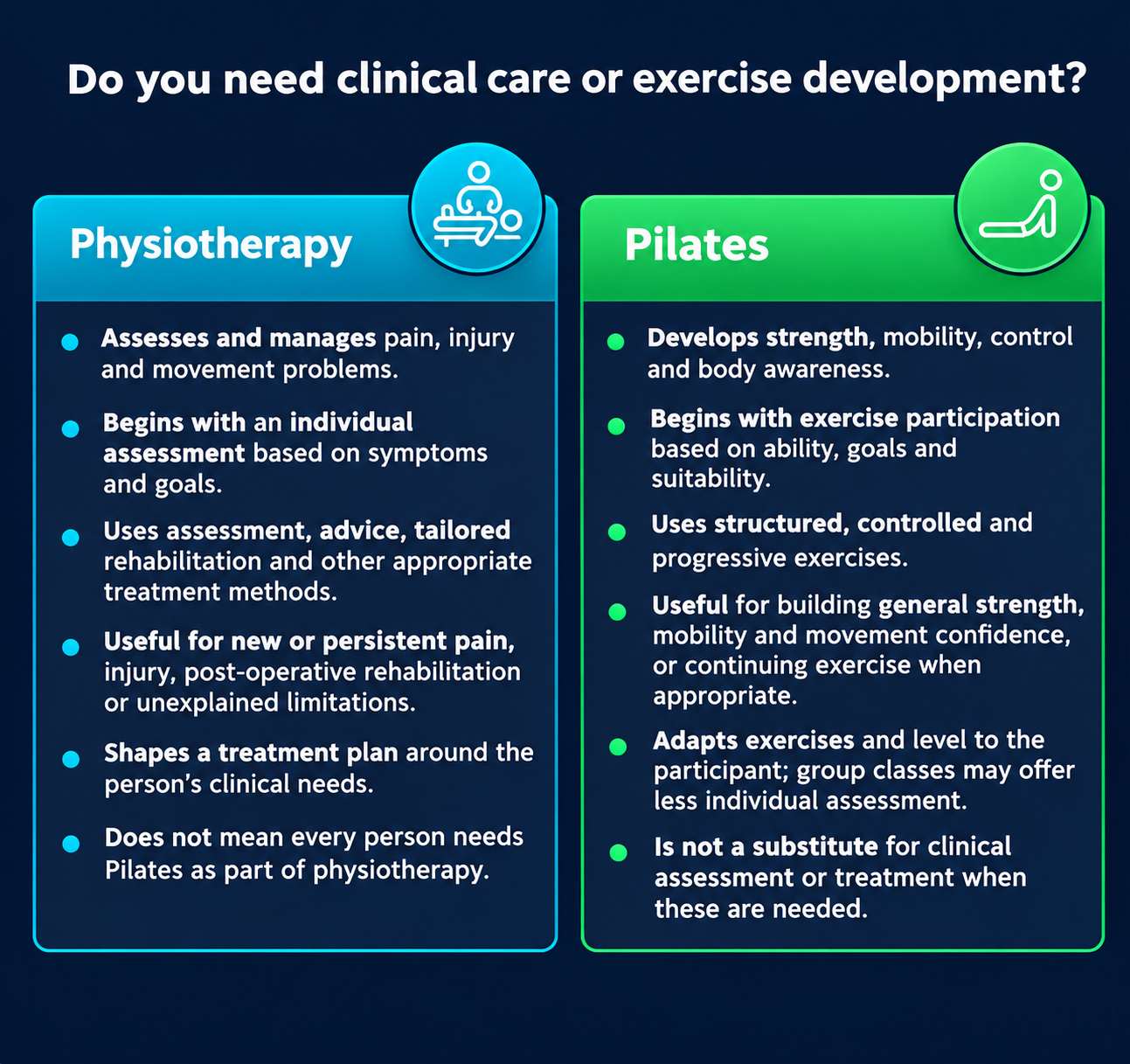
Physiotherapy is a health care profession that is concerned with the assessment and management of pain, injury, movement limitations and physical conditions. A physiotherapist will listen to your symptoms, health history, movement, strength and personal goals to suggest an appropriate plan. This can include education, advice on activity, hands-on techniques where appropriate and an individual exercise program depending on your needs.
Pilates is a systematic exercise with controlled movement, breathing, strength, mobility, balance and body awareness. The exercises can be progressed over time and adapted to suit different abilities. Pilates can help general fitness and for some people it can be part of a wider rehabilitation or exercise plan. But a Pilates class is no replacement for clinical assessment if you have a new or unresolved injury.
The easiest way to look at it is this: physiotherapy helps you to assess and manage a physical problem; pilates helps you to practise and develop movement abilities through regular physical activity.
When should you choose physiotherapy first?
Think about getting a physiotherapy assessment if:
Your pain is new, getting worse, or you don’t have a clear explanation for it.
You have injured a muscle, joint or ligament recently
Pain, stiffness or weakness is interfering with everyday things.
You have had surgery and need advice on safe rehabilitation.
Your symptoms return or get worse with exercise.
You don’t know which movements/exercises are beneficial for your condition.
An assessment can be useful to help clarify what may be contributing to your symptoms and what kind of support would be appropriate. Depending upon your individual presentation your plan may include advice, a graded exercise program and other treatment options. If your symptoms are severe or rapidly worsening, or if they are accompanied by concerning symptoms such as chest pain, sudden weakness, loss of bladder or bowel control or major trauma, seek urgent medical attention rather than beginning an exercise class.
When might Pilates be the right choice?
If you want to get stronger, improve your mobility, practise controlled movement or just get into a regular habit of exercising then Pilates could be for you. It can also be appropriate after an injury has been assessed and you are ready to advance your activity.
You want to gain overall strength, balance and mobility.
You want a structured way to practise controlled movement.
You have finished an initial rehabilitation phase and have been told to continue exercising.
You want to regain confidence when returning to normal physical activity.
You have ongoing stiffness but no new or unexplained symptoms that need to be assessed.
You don’t need to be super fit or flexible to start Pilates. The secret is to pick the right level and ensure the exercises are suitable to your current fitness. If you are in pain or have a medical condition, ask a qualified healthcare professional if a class or an individual program is the better starting point.
Can Pilates help with back pain?
Some people with back pain may benefit from undertaking Pilates-based exercise as it offers a structured approach to working on trunk strength, movement control, mobility and confidence with activity. However, back pain can be caused by many different things and not every exercise approach works for everyone.
If you have any new, severe, worsening back pain or it follows injury or affects normal daily activities then an individual assessment should be sought prior to joining a class. Once your symptoms have been assessed, a physiotherapist can advise which exercises may be appropriate and how to progress them. This is particularly so if you are searching for Pilates for back pain in Dubai but are not sure whether you should start with Pilates or physiotherapy.
Can you do Pilates and physiotherapy together?
Yes, they can work well together when the program fits your needs. For example, a person with a knee or back problem may need to have an assessment and individual rehabilitation plan. A suitable Pilates program can provide a means to continue working on strength, balance, control and general conditioning as symptoms and function improves.
Timing is everything. A person with a recent injury may need clinical guidance before moving into a group exercise setting. A stable person who has already been assessed may be ready for a broader exercise program. “It’s not about one method fits all, but rather meeting the person where they are and what they want to accomplish.
How can Physio Jonny help?
At Physio Jonny the goal is to help people to understand their movement concerns and choose the path that is right for them to better function. If you are in pain or recovering from an injury, physiotherapy can help determine what support may be appropriate and whether an individual rehabilitation plan is needed.
Depending on your needs and the services available, Pilates can be relevant as part of your exercise routine if you want to improve strength, mobility, control or confidence with movement. Where appropriate, Pilates-based exercise can be used as part of a wider rehabilitation plan but not as a substitute for physiotherapy.
Not sure which option is right for you? Contact Physio Jonny to discuss your goals and current concerns. The team can help you identify the most appropriate service and explain the next step. You can also explore the physiojonny.com/pilates and the relevant physiotherapy service pages physiojonny.com
Which should you choose? A simple guide
- If you have a new injury, unexplained pain or symptoms that are getting worse: start with a physiotherapy assessment.
- If your condition has been assessed and you want to build strength and movement confidence: Pilates may be a suitable exercise option.
- If you are recovering from an injury and want to return to exercise: ask your physiotherapist how and when to progress.
- If you are unsure: contact a qualified healthcare professional before starting a new programme.
Frequently Asked Questions
Is Pilates better than physiotherapy for back pain?
Neither is automatically better. Physiotherapy is a sensible starting point when back pain is new, worsening, unexplained or affecting daily life. Pilates-based exercise may be useful for some people once their symptoms and exercise suitability have been assessed.
Should I do Pilates before or after physiotherapy?
It depends on your symptoms and goals. If you have an injury or pain that needs assessment, start with a physiotherapist. Pilates may be introduced alongside or after physiotherapy when it is appropriate for your condition and stage of recovery.
Can Pilates replace physiotherapy?
No. Pilates is exercise, not a clinical assessment or a substitute for physiotherapy when you need diagnosis, injury management or individual rehabilitation guidance.
What is clinical Pilates in Dubai?
Clinical Pilates generally refers to Pilates-based exercise adapted using rehabilitation principles and individual needs. The exact format and qualifications of the provider can vary, so ask what assessment, supervision and adaptations are included before booking.
Can beginners do Pilates if they are not flexible?
Yes. Flexibility is not a requirement for starting. Exercises can often be modified to suit different levels, but choose a suitable class or level and seek advice if you have pain or a health condition.
Can Pilates help after an injury?
It may support strength, mobility and movement confidence during a later stage of recovery. The exercises and timing should be guided by the injury, healing stage and advice of your healthcare professional.