
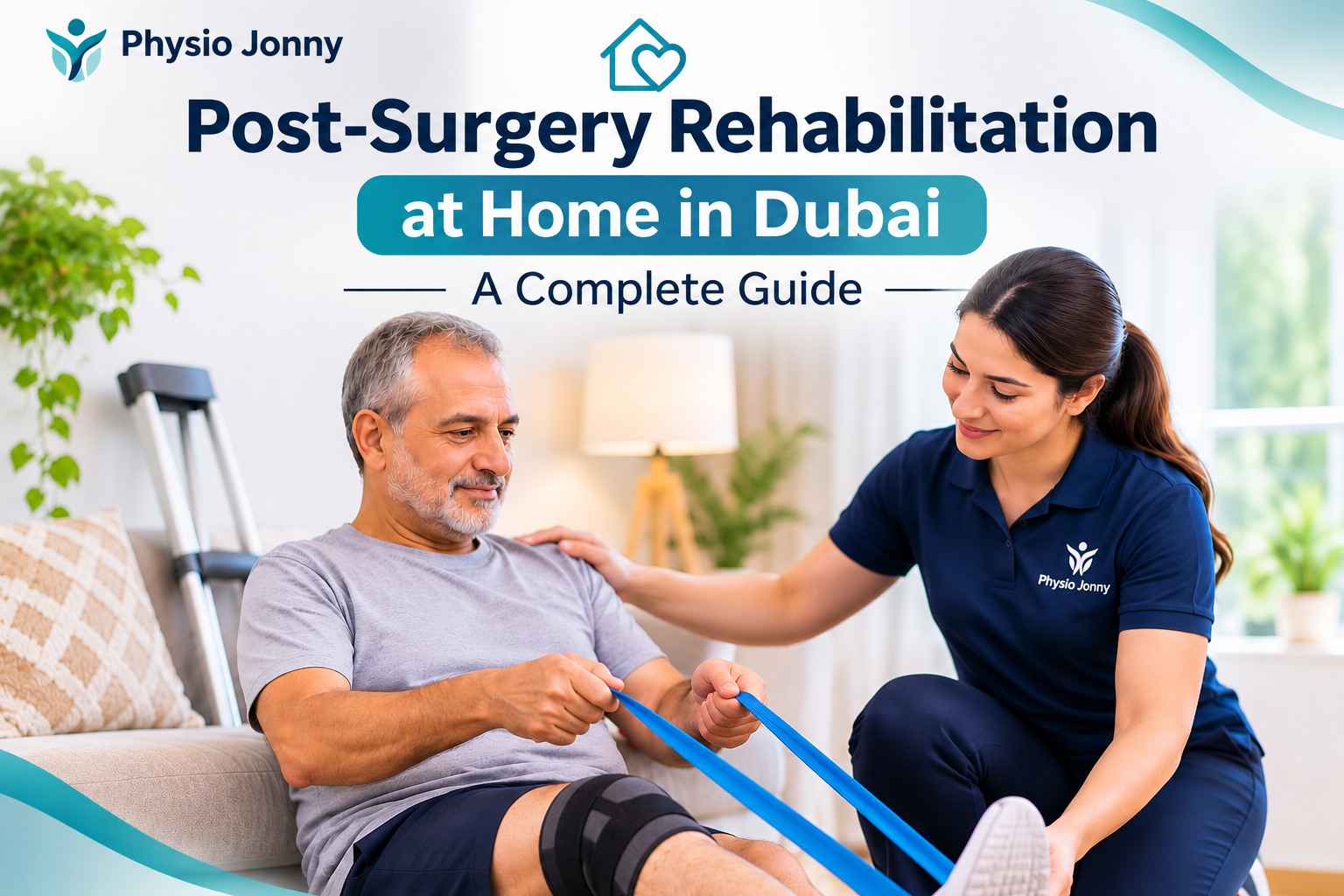
Post-Surgery Rehabilitation at Home in Dubai: A Complete Guide
Introduction
After surgery, recovery requires patience, time, and the proper rehabilitation assistance. Even while surgery treats the underlying medical issue, further physical therapy is frequently necessary to recover strength, flexibility, and normal mobility.
Following surgery, many people find it difficult or painful to go to a clinic. A handy option is post-surgery rehabilitation at home in Dubai, which enables patients to get expert physiotherapy in their comfortable home setting.
Patients can progressively increase their mobility, control stiffness, regain muscular strength, and work toward resuming daily activities with a customized rehabilitation program.
This book discusses how long recovery could take, what home rehabilitation entails, and how physiotherapy can aid in the healing process following various surgical procedures.
What Is Post-Surgery Rehabilitation?
A organized physiotherapy program called post-surgical rehabilitation is intended to assist patients in regaining their physical function after surgery.
Following surgery, patients may encounter:
Pain and swelling around the operated area.
Reduced joint mobility and flexibility.
Muscle weakness due to inactivity.
Difficulty walking or performing daily activities.
Reduced balance and coordination.
A physiotherapist evaluates these difficulties and creates a customized therapy plan based on the operation, the patient’s physical state, and the surgeon’s suggestions.
Restoring mobility, increasing strength, boosting confidence, and facilitating a safe return to everyday activities are the primary objectives of post-operative rehabilitation.
How Long Does Recovery Take After Surgery?
How long recuperation will take is one of the most often asked questions by patients.
Because healing depends on the type of surgery, the patient’s age, general health, physical condition, and consistency with rehabilitation, there is no set recovery period.
A general summary is given by the following stages:
Recovery stage | Main focus |
Early recovery | Pain management, swelling control and safe movement |
Initial rehabilitation | Gentle mobility and basic daily activities |
Strength development | Progressive strengthening, balance and walking |
Functional recovery | Improving independence and returning to regular activities |
While large operations like knee replacement or spine surgery may take many months or more of rehabilitation, minor treatments can just need a few weeks.
Your physiotherapist will evaluate your progress and modify your regimen to suit your recuperation. These timetables do not guaranty results; they are only broad examples.
What Does Home-Based Post-Surgery Rehabilitation Involve?
Home-based rehabilitation allows patients to receive physiotherapy without regularly travelling to a clinic. A structured programme may include the following stages.
1. Initial Assessment and Recovery Planning
The first step is a detailed assessment of the patient’s condition. A physiotherapist may review:
Type of surgery and medical history.
Pain levels and swelling.
Current mobility and muscle strength.
Walking ability and balance.
Movement restrictions provided by the surgeon.
Based on this assessment, the physiotherapist creates a personalised rehabilitation plan with realistic recovery goals.
2. Pain management and early mobility
The goal of early recovery is to preserve safe mobility while safeguarding the operated region.
Treatment options may include safe bed transfers, suitable posture, walking with recommended assistance, light mobility exercises, and edema control techniques, depending on the procedure and medical clearance.
3. Regaining Flexibility and Strength
Muscles may weaken after surgery as a result of inactivity or limited mobility. Physiotherapists may implement exercises to enhance muscular strength, joint flexibility, range of motion, balance, and coordination as the healing process advances.
Exercise intensity is progressively changed based on the patient’s healing progress and tolerance.
4. Enhancing Daily Movement and Walking
An essential component of rehabilitation is regaining independence. Walking, standing, climbing stairs, sitting, and getting out of bed may all require assistance for patients.
Functional exercises can be introduced by a physiotherapist to enhance confidence and motor control during daily tasks.
5. Resuming Regular Activities
The goal of the later phases of rehabilitation is to increase strength, stamina, and mobility. Progressive strengthening, balance training, walking exercises, and work-related or sport-specific rehabilitation may be part of this, depending on the operation and personal objectives.
Only when medical advice and recuperation progress permit it should one resume strenuous activity.
Physiotherapy After Different Types of Surgery
Different rehabilitation strategies are needed for different surgical procedures. Treatment should always be tailored to the surgeon’s procedure and the damaged body part.
Knee Replacement Surgery: Restoring walking capacity, strengthening surrounding muscles, decreasing stiffness, and enhancing knee mobility are all major goals of rehabilitation.
Hip Replacement Surgery: While adhering to the surgeon’s restrictions, physiotherapy helps patients restore confidence with daily activities, strengthen supporting muscles, and increase mobility.
Knee Ligament and ACL Surgery: Restoring knee mobility, strength, balance, and coordination gradually is the main goal of rehabilitation. It takes gradual progression to resume athletics.
Shoulder Surgery: Rehabilitation may go from protected movement to strengthening and functional exercises after surgeries like rotator cuff surgery.
Spinal Surgery: Depending on the treatment and physician recommendations, recovery may include safe mobility, posture, walking, core stability, and progressive functional improvement.
Explore our Orthopaedics Physiotherapy services to learn more about orthopaedic care and rehabilitation.
Benefits of Physiotherapy at Home in Dubai
Travelling after surgery can be challenging, particularly for patients experiencing pain or limited mobility. Choosing physiotherapy at home in Dubai offers several practical advantages:
- Comfort: Patients receive treatment in their familiar home environment.
- Convenience: Regular travel to a physiotherapy clinic may not be necessary.
- Individual attention: Treatment is adapted to the patient’s condition and recovery goals.
- Practical movement training: A physiotherapist can assess how patients move around their actual living environment.
- Family involvement: Family members can learn how to support safe movement where appropriate.
Musculoskeletal physiotherapy can also support recovery by addressing muscle weakness, joint stiffness and movement difficulties. Learn more about our Musculoskeletal Physiotherapy services.
Essential Tips for a Safe Recovery at Home
Following practical recovery habits can help patients manage rehabilitation more effectively.
Observe Medical Instructions: When it comes to wound care, weight-bearing, and mobility limitations, always heed your surgeon’s advise.
Maintain Exercise Consistency: Perform the recommended exercises as directed. Exercise intensity should never be increased without expert advice.
Make Time for Rest: To promote healing, strike a balance between physical activity and enough rest.
Maintain Good Nutrition: General health and healing are supported by a balanced diet and sufficient fluids.
Keep Your House Secure: Keep commonly used goods close to hand, tidy walking spaces, and remove any stray carpets. When necessary, use the walking aids that have been recommended.
Communicate With Your Physiotherapist: Report changes in pain, swelling, movement or exercise tolerance so your rehabilitation plan can be reviewed.
When Should You Contact Your Medical Team?
Some discomfort can occur during recovery, but certain symptoms require prompt medical attention.
Contact your surgeon or healthcare team if you experience:
A sudden increase in pain or swelling.
Fever or chills.
Redness, warmth or unusual discharge around the surgical wound.
New or worsening numbness or weakness.
Unexpected difficulty bearing weight.
Seek emergency medical assistance if you experience sudden chest pain, severe breathlessness or fainting. Do not attempt to manage serious post-operative complications through physiotherapy alone.
Start Your Recovery Journey With Physio Jonny
Recovering after surgery requires time, professional guidance and a rehabilitation programme suited to your individual needs.
Physio Jonny provides home physiotherapy services across Dubai, helping patients work towards improved mobility, strength and physical function in the comfort of their homes.
Whether you are recovering from orthopaedic surgery, joint replacement or another procedure, appropriate physiotherapy can help you progress towards greater independence.
Ready to take the next step in your recovery?
Book an Appointment with Physio Jonny and explore professional home physiotherapy services across Dubai.
Frequently Asked Questions (FAQs)
1. What is the duration of rehabilitation following surgery?
The operation, overall health, and each patient’s healing process all affect recovery. While some individuals take many months, others just need a few weeks.
2. After surgery in Dubai, is it possible for me to have physiotherapy at home?
Indeed, depending on their medical condition and the surgeon’s advice, many patients may benefit from home-based physical therapy.
3. After surgery, when should I begin physical therapy?
The surgery and your surgeon’s instructions will determine the commencement time. While some treatments need a period of protection, others start recovery shortly after surgery.
4. What activities are part of physical rehabilitation after surgery?
Depending on the procedure, workouts might include functional exercises, walking practice, strengthening, balance training, and mild mobility movements.
5. Is at-home physical treatment appropriate following a hip or knee replacement?
After both treatments, it could be appropriate. The patient’s mobility, surgical safety measures, and rehabilitation objectives all influence the course of treatment.